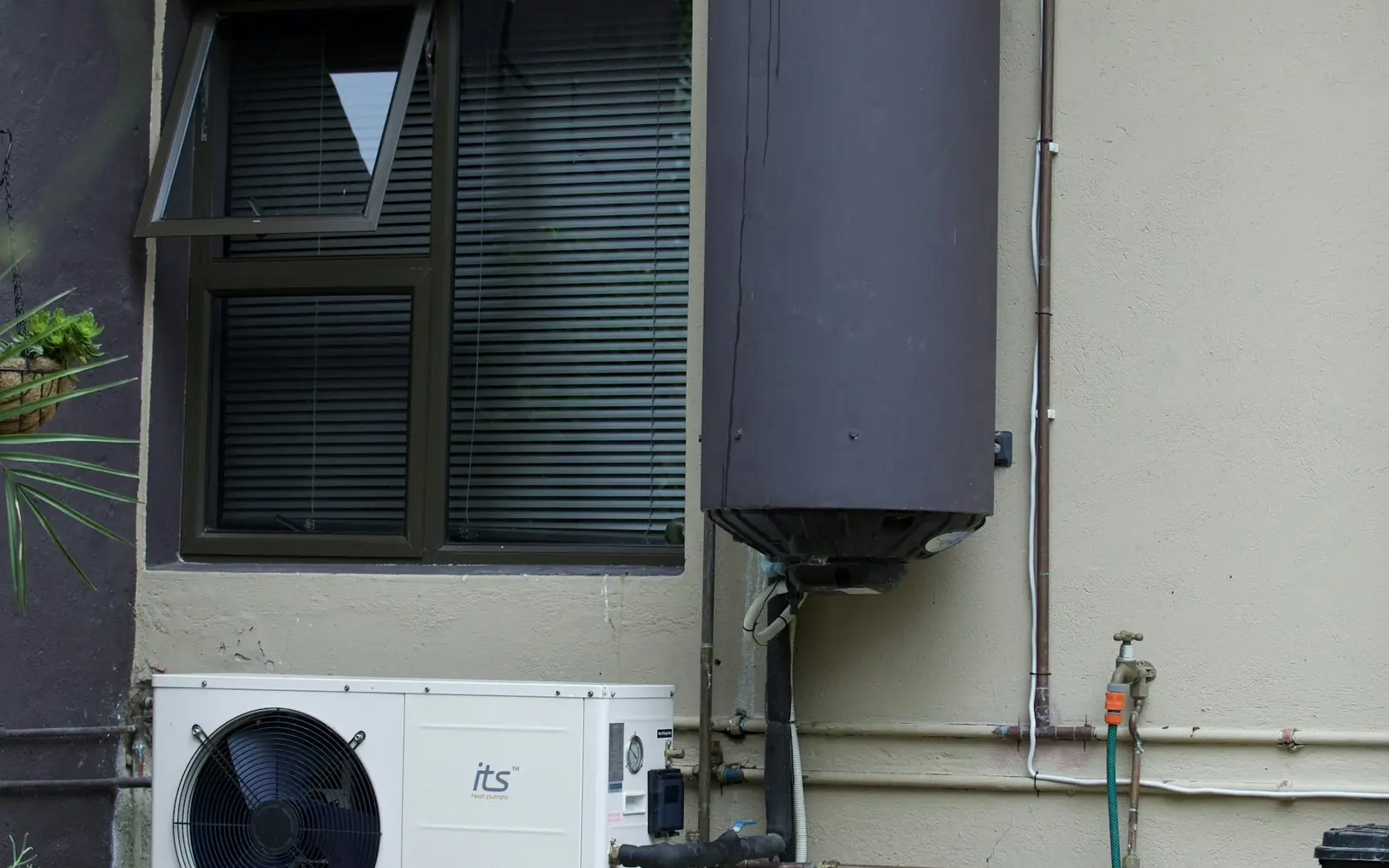
How much does a new hot water system cost?
Typical supply-and-install prices in Australia, before rebates:
| System | Low | Typical | High |
|---|---|---|---|
| Electric storage | $800 | $1,800 | $3,000 |
| Gas storage | $1,200 | $2,200 | $3,500 |
| Continuous flow gas | $1,500 | $2,200 | $3,500 |
| Heat pump | $3,000 | $4,200 | $6,000 |
| Solar (electric boost) | $3,500 | $5,000 | $7,000 |
Source: whatsthedamage.com.au (verified November 2026). For the unit alone, Yellow Pages (May 2026) lists electric storage tanks at $525–$2,000, gas storage at $880–$1,525, continuous flow gas at $785–$1,625 and heat pumps at $3,000–$4,000.
Installation costs and extras
| Item | Typical cost |
|---|---|
| Installation, like-for-like replacement | $300–$800 (Yellow Pages) |
| Installation, new or different system | $1,000–$3,000 (Yellow Pages) |
| Removal and disposal of the old unit | $75–$200 |
| Tempering valve | $150–$400 |
| Urgent same-day like-for-like replacement | $1,300–$4,000 in total |
Switching type, for example from gas to a heat pump, can need extra plumbing, a new power circuit or capping the gas line. That work varies a lot from house to house, so ask for it as a separate line in your quote.
Which hot water system is cheapest to run?
Typical yearly running costs for a 3–4 person household, at Brisbane energy prices:
| System | Per year |
|---|---|
| Electric storage | $500–$1,200 |
| Gas storage | $450–$1,250 |
| Continuous flow gas | $400–$1,050 |
| Heat pump | $200–$480 |
| Solar (electric boost) | $120–$300 |
That is why the calculator shows a 10-year cost: a heat pump often costs about $2,000 more upfront than a gas or electric tank, but can save several hundred dollars a year to run. Off-peak tariffs, solar panels and your climate all shift the numbers.
Hot water rebates by state (2026)
| Where | What's available |
|---|---|
| Australia-wide | STC discount on eligible heat pumps and solar water heaters, usually applied at the point of sale (about $500–$700 on a heat pump) |
| Victoria | Solar Homes rebate of 50% of the price after other discounts, up to $1,000 ($1,400 for locally made products). Owner-occupiers with combined taxable income under $150,000, property under $3 million, existing system at least 3 years old. VEU discounts also apply, up to about $560 when replacing gas. |
| NSW | Energy Savings Scheme discounts through participating installers, reported at up to $640 replacing electric with a heat pump, $330 replacing gas, or $900 for solar replacing electric. The NSW Government says larger discounts are available until June 2027. |
| ACT | 50% up to $2,500 for eligible concession card holders, plus low-interest loans. |
| Queensland, Tasmania, WA, NT | Federal STCs only; Queensland's Climate Smart Energy Savers rebate has closed. |
| South Australia | Discounted upgrades offered by some energy retailers under REPS. |
Rebates change often and have eligibility rules. Check the current amounts with your state program and installer before you buy.
Which hot water system should I choose?
Electric or gas tank
Cheapest upfront and quick to swap like-for-like, but the most expensive to run.Heat pump
Higher upfront cost, low running cost and rebates in most states. Needs an outdoor spot with airflow.Solar
Lowest running cost in sunny areas, but the highest upfront price and needs suitable roof space.- Size the system for your household: an undersized tank runs out, an oversized one wastes energy.
- Ask whether the quote includes removal, a tempering valve and any electrical or gas work.
- Installation must be done by a licensed plumber, with gas work by a licensed gas fitter and electrical work by a licensed electrician. Renovating the bathroom at the same time? Budget it with the bathroom renovation cost calculator.
How we estimate
- System, installed: whatsthedamage.com.au's low, typical and high prices by type. Heat pumps use their 250–270 L range for 1–2 people and 300–315 L range for 5+. "Urgent" uses their same-day like-for-like range for electric and gas tanks.
- Extras: removal $75–$200 and tempering valve $150–$400 (same source).
- Rebates: federal STC discount of $500–$700 on heat pumps; Victoria's Solar Homes rebate (50% after other discounts, capped at $1,000) and VEU up to $560 when replacing gas; NSW up to $640 (electric to heat pump), $330 (gas to heat pump) or $900 (electric to solar). The STC on solar varies by model and zone, so it isn't included. ACT concession rebates aren't included.
- Running cost: the middle of each system's yearly range for 3–4 people at Brisbane prices, scaled ×0.6 for 1–2 people and ×1.4 for 5+ (our assumption). 10-year cost = net upfront cost + 10 × yearly running cost, without price changes.
Sources (accessed November 2026): whatsthedamage.com.au hot water system cost (verified Nov 2026), whatsthedamage.com.au hot water rebates (Oct–Nov 2026), Solar Victoria (updated Nov 2026), NSW Government, Yellow Pages (May 2026). Estimates are a guide only.
Frequently asked questions
How much does it cost to replace a hot water system?
Installed prices are typically around $800–$3,000 for electric storage (typically $1,800), $1,200–$3,500 for gas storage or continuous flow gas (typically $2,200), $3,000–$6,000 for a heat pump before rebates (typically $4,200) and $3,500–$7,000 for solar. Removing the old unit, a tempering valve and any work to change system type are extra.
How much does a heat pump hot water system cost after rebates?
Nationally, a heat pump typically costs about $2,500–$5,300 after the federal small-scale technology certificate (STC) discount, which is usually worth about $500–$700. In Victoria and NSW, eligible households can get further state discounts on top.
Is a heat pump cheaper to run than an electric hot water system?
Usually, yes. For a 3–4 person household at Brisbane prices, a heat pump costs around $200–$480 a year to run, compared with $500–$1,200 for electric storage. Solar with an electric booster is lower again at $120–$300. Your tariff, climate and hot water use change these numbers.
How much does an urgent same-day hot water replacement cost?
An urgent like-for-like replacement typically costs about $1,300–$4,000, with $2,300 typical. Same-day jobs usually mean taking whichever compatible system the plumber has in stock.
Can I replace a gas hot water system with gas in Victoria?
Not for much longer. Solar Victoria says that from 1 March 2027, existing homes must replace end-of-life gas hot water systems with an efficient electric alternative, such as a heat pump. If your gas system is near the end of its life, it is worth planning the switch now.
Do I need a licensed plumber to replace a hot water system?
Yes. Hot water installation must be done by a licensed plumber, gas connections by a licensed gas fitter, and electrical connections by a licensed electrician or a plumber with the right restricted electrical licence.
Results are estimates to help you plan and compare quotes. They are not a substitute for advice from a licensed tradesperson or engineer.